New study examines differences in mortality after myocardial infarction
In patients with ST-elevation myocardial infarction (STEMI), rapid treatment to restore blood flow in the coronary arteries is crucial. At the same time, the new study, published in European Heart Journal – Quality of Care and Clinical Outcomes, shows that time to treatment is not the only factor that may affect patient outcomes.
The researchers studied 3,344 patients with STEMI who underwent coronary angiography at one of four hospitals in Region Skåne between 1 January 2015 and 15 August 2025. Of these, 1,876 patients were treated at Skånes universitetssjukhus and 1,468 at the other hospitals.
At 30 days, mortality was 5.1 per cent among patients treated at Skånes universitetssjukhus, compared with 8.6 per cent among patients treated at the other hospitals.
Differences in mortality were also observed at one and three years. At one year, mortality was 8.2 per cent compared with 11.8 per cent, and at three years, 13.6 per cent compared with 17.5 per cent. At five years, there was no statistically significant difference in mortality between the groups.
At the same time, the time from ECG to treatment was longer at Skåne University Hospital – a median of 91 minutes compared with 53 minutes at the other hospitals. The times for both patient groups were within the recommended thresholds for transfer for treatment.
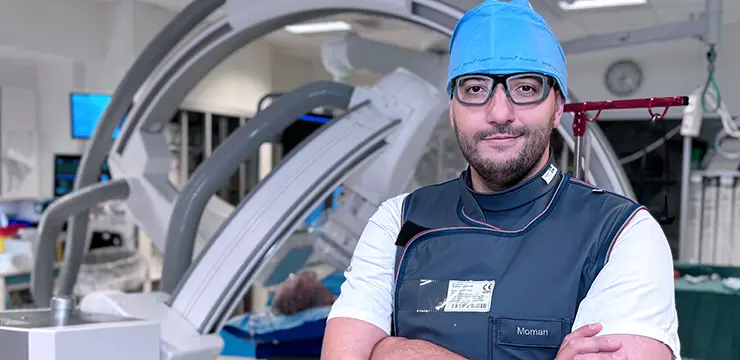
“Rapid treatment remains very important for this type of myocardial infarction. At the same time, our results show that other factors also affect patient survival,” says Moman A Mohammad, consultant in cardiology at Skåne University Hospital and associate professor at Lund University, and senior author of the study.