New research: Could a medical food save lives after severe head injury?
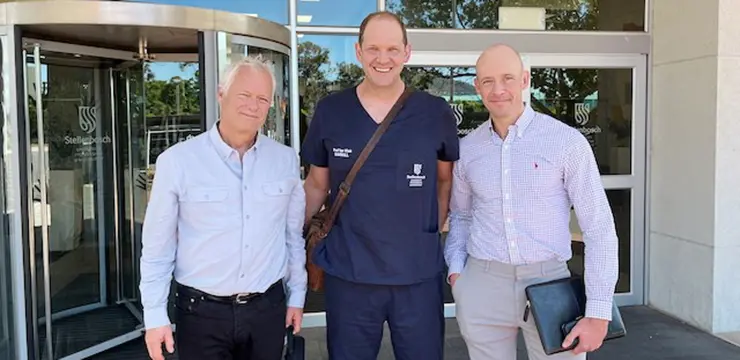
A total of 100 patients took part in the randomised clinical trial, which was conducted at Tygerberg Academic Hospital in Cape Town. The aim was to compare mortality among patients who received standard treatment following severe traumatic brain injury with mortality among patients who also received the supplement.
After 30 days, mortality among patients with traumatic brain injury who had been randomised to standard treatment was 39 per cent. Among patients who also received the supplement, mortality was 20 per cent – a reduction of 19 percentage points. No significant adverse events associated with the treatment were observed.
Improved survival
The medical food, Salovum, is a freeze-dried egg yolk powder enriched with high concentrations of the endogenous protein antisecretory factor (AF) and AF-derived peptides. As previous experimental studies have shown that AF can reduce inflammation and cerebral oedema, the researchers chose to investigate the supplement in patients with severe traumatic brain injury.
“It is both unusual and encouraging to see a statistically significant improvement in survival among patients with severe traumatic brain injury in a randomised clinical trial,” say Peter Siesjö and David Cederberg, consultant neurosurgeons at Skånes University Hospital and researchers at Lund University who were responsible for the study.
The results have recently been published in the scientific journal Brain. The study was a prospective, double-blind, placebo-controlled phase II trial.
More than 70 million people worldwide experience a traumatic brain injury each year. The most severe form is associated with high mortality and substantial long-term morbidity. Despite advances in neurocritical care, cerebral monitoring and neurosurgery, few treatments have been shown to improve survival.
“As neurosurgeons, we treat patients with severe traumatic brain injuries, yet despite advanced intensive care and surgery, our ability to influence the course of the injury itself is limited. The results therefore offer hope,” says David Cederberg.